| Search |


a division of the American
Chemical Society

You have reached the Older version of the Website for the
Division of Polymer Chemistry, Inc.
This website is not being updated as of July 2018.
Please visit the NEW POLY website at:
Advancing the world through polymer chemistry

| Search |
Award Winners
for Outstanding Graduate Research in Polymer Science & Engineering
The award is sponsored by the ACS Divisions of Polymer Chemistry and Polymeric Materials Science and Engineering and is administered by PolyEd, the polymer education committee of the two divisions.
Note: This award is currently (2015- ) sponsored by Henkel
From 2009-2013 this ward was sponsored by AkzoNobel
From 2004-2008 this award was sponsored by National Starch & Chemical,
From 1991-2003 this award was sponsored by the Unilever Co.
| Year | Awardee | Institution |
Advisor |
| 2017 | John W. Colson | ClostraBio, Inc. | |
| 2016 | Maxwell Robb | University of California Santa Barbara | Craig Hawker |
| 2015 | Jessica Kramer | UCLA Graduate | Tim Deming |
| 2014 | Felix Sunjoo Kim | University of Washington | Samson Jenekhe |
| 2013 | Hua Lu | University of Illinois-Urbana-Champaign | Jianjun Cheng |
| 2012 | Garret Miyake | Colorado State University | Eugene Chen |
| 2011 | Rong Tong | University of Illinois at Urbana-Champaign | Jianjun Cheng |
| 2010 | Haifeng Gao | Carnegie Mellon University | Krzysztof Matyjaszewski |
| 2009 | Christopher J. Bettinger | MIT | Robert Langer |
|
From 2006-2008 sponsored by National Starch & Chemical |
|||
| 2008 | Nick Tsarevsky | Carnegie Mellon University | Kris Matyjaszewski |
| 2007 | Jason Rolland | University of North Carolina, Chapel Hill | Joe DeSimone |
| 2006 | Jiaxing Huang | University of California, Los Angeles | Richard B. Kaner |
| From 1991-2003, Sponsored by the Unilever Company | |||
| 2003 | Christopher W. Bielawski | California Institute of Technology | Robert H. Grubbs |
| 2002 | Kristi L. Kiick | University of Massachusetts, Amherst, MA, | David A. Tirrell |
| 2001 | Shu Yang | Cornell University, Ithica, NY | Christopher K. Ober |
| 2000 | Linda Chen | U. Rochester | Samson Jenekhe |
| 1999 | Scott G. Gaynor | Carnegie Mellon U., Pittsburgh, PA | Krzysztof Matyjaszewski |
| 1998 | James J. Watkins | U. Massachusetts, Amherst | Thomas J. McCarthy |
| 1997 | Dong-Yu Kim | U Massachusetts-Lowell | Sukant Tripathy |
| 1996 | Kristi S. Anseth | U. Colorado, Boulder | Christopher Bowman |
| 1995 | Rangaramanujam M. Kannan | California Institute of Tech. | Julia Kornfield |
| 1994 | Timothy J. Deming | U. Massachusetts, Amherst | Bruce Novak |
| 1993 | Christopher N. Bowman | Purdue U. | Nicholas Peppas |
| 1992 | Richard A. Register | U. Wisconsin, Madison | Stuart Cooper |
| 1991 | Christopher B. Gorman | California Institute of Tech. |
Robert Grubbs |
The winner of the 2017 Henkel Award for Outstanding Graduate Research in Polymer Chemistry is John W. Colson from ClostraBio, Inc.
He earned his Ph.D. in 2015 at Cornell University with Prof. William Dichtel for preparation of two-dimensional covalent organic framework polymers interfaced with single layer graphene and application of the polymers with graphene sheets as materials for optoelectronic devices. After postdoctoral research at the University of Chicago with Profs. Matthew Tirrell and Paul Nealey, Dr. Colson now works at ClostraBio, Inc., in Chicago, IL.
Given annually, the Henkel Award recognizes the author of the best Ph.D. thesis in polymer chemistry during the three years preceding the date of the award. The award is sponsored by the Henkel Corporation and the ACS Divisions of Polymer Chemistry and Polymer Science: Materials and Engineering, and is administered by PolyEd, the polymer education committee.
The award symposium in his honor was held in the POLY program at the ACS National Meeting in Washington, DC on August 23, 2017.

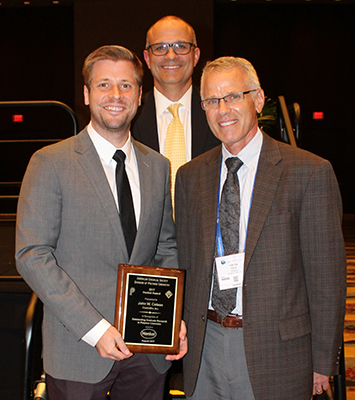
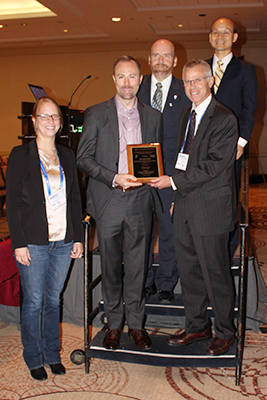
Henkel Award: (l-r) J. Colson (CostraBio),
M. Hillmyer (POLY Chair), C.W. Paul (Henkel)
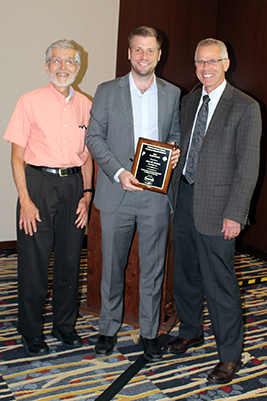
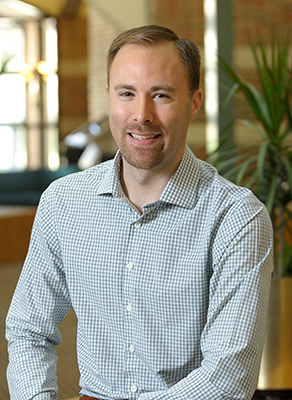
Maxwell Robb
The winner of the 2016 Henkel Award for Outstanding Graduate Research in Polymer Chemistry is Dr. Maxwell Robb who earned the Ph.D. with Prof. Craig Hawker at University of California Santa Barbara for research in the field of organic electronics. He designed a new synthetic strategy for the straightforward preparation of donor-acceptor conjugated copolymers that contain well-defined functional chain-ends. These novel materials enable determination of fundamental optical and electronic properties of D-A copolymers. His technology also enables the investigation of nanoscale self-assembly with conjugated polymers. He designed a new series of perylene-based organic materials that show great promise in the emerging area of organic thermoelectric materials. Devices have already been fabricated with thermoelectric performance better that anything previously reported. This strategy is a new paradigm in the chemistry of conjugated materials for renewable energy applications. Dr. Robb did undergraduate research with Prof. Dan Knauss at the Colorado School of Mines and is currently a postdoctoral researcher with Prof. Jeffrey Moore at the University of Illinois. The award symposium in his honor was held in the PMSE program at the ACS National Meeting in Philadelphia August 23, 2016.
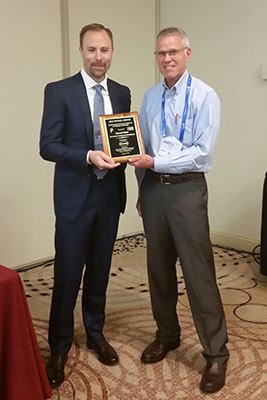
M. Robb (University of Illinois) and
C. W. Paul (Henkel)
Jessica Kramer is the winner of the 2015 Henkel Award for Graduate Research in Polymer Chemistry. The award was presented at a symposium held in her honor at the ACS National Meeting in Boston, MA, August 16-20.
Dr. Kramer completed the Ph.D. in Chemistry in 2013 at UCLA with Prof. Tim Deming. In her Ph.D. research she prepared functional glycosylated polypeptides with controlled placement of sugar groups via living polymerization of highly
pure glycosylated alpha-aminoacid-N-carboxyanhydride monomers.
She is now a NIH and UC Chancellor’s Postdoctoral Fellow with Prof. Carolyn Bertozzi at the University of California - Berkeley.Korea. The award was supported financially by Henkel.
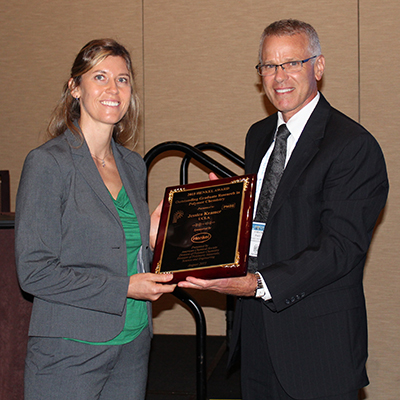
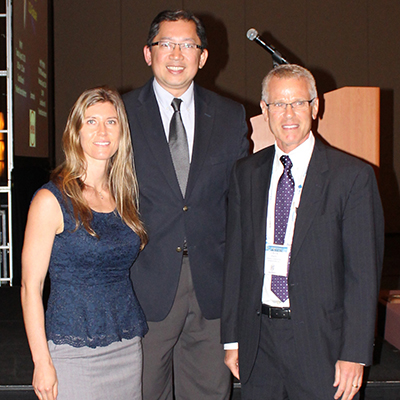
(l-r ) J. Kramer (UCLA Graduate), R. Advincula (POLY Chair), and C. W. Paul, (Henkel)
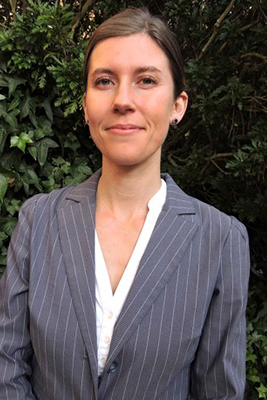
Jessica Kramer
Outstanding Graduate Research Award
__________________________________________________
2014 (sponsored by: POLY/PMSE/PolyEd)
The 2014 Award for Outstanding Graduate Research in Polymer Chemistry was presented to Dr. Felix Sunjoo Kim at the ACS National Meeting in San Francisco August 10-14. Dr. Kim completed a Ph.D. in Chemical Engineering in 2012 at the University of Washington with Prof. Samson Jenekhe. His Ph.D. research on the charge transport properties of polymer semiconductors and polymer-based thin film transistors has resulted in more than 30 articles in leading journals. He is now a tenure-track Assistant Professor of Chemical Engineering and Materials Science at the Chung-Ang University in Seoul, Korea. The award was supported financially this year by POLY, PMSE, and PolyEd.
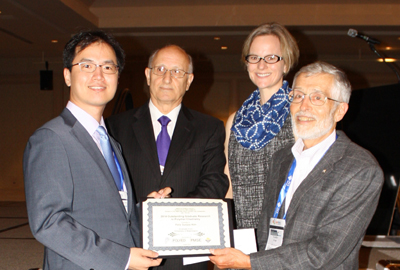
Outstanding Graduate Research Award: (l-r ) F. Kim (Univ. of Washington Graduate), J. Baghdachi (PMSE), K. Beers (POLY), W. Ford (PolyEd)
The 2013 AkzoNobel Award for Outstanding Graduate Research in Polymer Chemistry was presented to Dr. Hua Lu at the ACS National Meeting in Indianapolis, September 7-11.
Dr. Lu completed a Ph.D. in Materials Science & Engineering in 2011 at the University of Illinois at Urbana-Champaign with Prof. Jianjun Cheng. His Ph.D. research on the controlled synthesis of polypeptides by ring opening polymerization of N-carboxyamino acid anhydrides has wide utility for making functional biomaterials for drug delivery and gene delivery applications. Using N-trimethylsilylamines as catalysts produces polypeptides of controlled length and low polydispersity. One pot synthesis by sequential ring-opening metathesis polymerization and NCA ring-opening polymerization produces polymer brushes with helical side chains. Dr. Lu’s Ph.D. research appears in more than fourteen articles in leading journals. He is now a Damon Runyan Postdoctoral Research Fellow with Prof. Peter Schultz at the Scripps Research Institute.
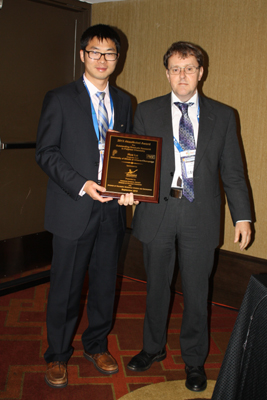
l-r: H. Lu (Univ. of Illinois Graduate and
Keimpe van den Berg (AkzoNobel)
The winner of the 2012 AkzoNobel Award for Outstanding Graduate Research in Polymer Chemistry is Dr. Garret Miyake, who earned the Ph.D. in 2011 at Colorado State University under the mentorship of Prof. Eugene Chen. He also spent a summer doing research as an NSF-EAPSI Fellow with Prof. Eiji Yashima at the University of Nagoya, Japan. Dr. Miyake is now a postdoctoral researcher at California Institute of Technology with Prof. Robert Grubbs.
In his Ph.D. research Dr. Miyake accomplished the asymmetric coordination polymerization of achiral polar vinyl monomers into optically active, chiral vinyl polymers. He and a graduate student colleague prepared enantiomeric, cationic ansa-zirconocenium ester enolate catalysts via an 11-step synthesis and employed the catalysts to prepare optically active poly(N,N-diarylacrylamides). He also accomplished the first coordination addition polymerization of N,N-dialkylmethacrylamides and the first kinetic resolution of racemic methacrylamides by chiral metallocene catalysts. Dr. Miyake made important progress in the use of frustrated Lewis pair and organolanthanide catalysts for efficient polymerization of naturally renewable monomers into sustainable polymers that are alternatives for polymers based on petroleum. He also discovered the first kinetic resolution polymerization of racemic lactide using chiral organic catalysts. This method enables the synthesis of biomedical polymers such as polylactide with no trace of metal residues. Dr. Miyake’s Ph.D. research appears in twelve papers in leading chemistry journals.
The award will be presented at a symposium in honor of Dr. Miyake at the American Chemical Society National Meeting in Philadelphia August 19-23, 2012 in the Division of Polymeric Materials Science and Engineering.
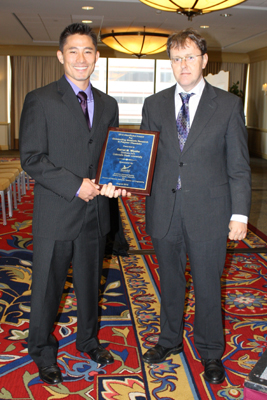
(l to r) Dr. Garret Miyake, Awardee, and Keimpe van den Berg, AkzoNobel
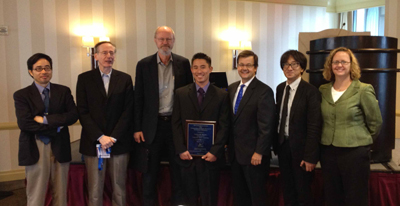
Speakers at the 2012 AkzoNobel Award Symposium for Outstanding Graduate
Research in Polymer Science and Engineering honoring Garret Miyake, ACS
National Meeting, Philadelphia:
left to right: Eugene Chen, Tobin Marks,
Robert Grubbs, Garret Miyake, Robert Waymouth, Eiji Yashima, Amy Prieto.
_________________________________
The winner of the 2011 AkzoNobel Award for Outstanding Graduate Research in Polymer Chemistry is Rong Tong.
Dr. Tong earned the Ph.D. in Materials Research and Engineering in 2010 at the University of Illinois at Urbana-Champaign under the mentorship of Prof. Jianjun Cheng. The award is given for the best Ph.D. thesis in polymer chemistry during the three years prior to the year of the award, and is administered by PolyEd, the polymer education committee of the ACS jointly sponsored by the Division of Polymer Chemistry (POLY) and the Division of Polymeric Materials: Science and Engineering (PMSE). The award was presented August 30 at a POLY symposium in honor of Dr. Tong at the ACS National Meeting in Denver.
Dr. Tong’s research focused on nanoconjugation, a novel polymerization chemistry for making anticancer polymeric nanomedicine by controlled, regioselective polymerization of lactide. He expanded this technique to doxorubicin and many other complex therapeutic molecules, and demonstrated chemoselective and regioselective polymerizations via the use of rationally designed catalysts. He extended the research to aptamer liposomes for breast cancer targeting. Dr. Tong’s Ph.D. research has appeared in 14 publications in leading scientific journals.
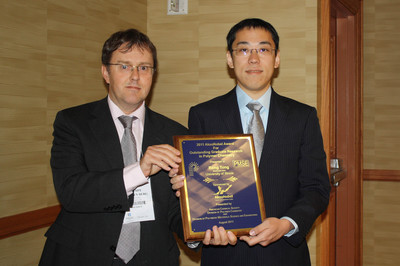
(l to r) Keimpe van den Berg, AkzoNobel and Rong Tong, Awardee
__________________________________
The recipient of the 2010 AkzoNobel Award for Outstanding Graduate Research in Polymer Chemistry is Dr. Haifeng Gao, who received his doctorate in 2008 from Carnegie Mellon University under the direction of Professor Krzysztof (Kris) Matyjaszewski, and is now a postdoctoral researcher in Professor Jean M. J. Fréchet’s group in University of California, Berkeley.
Haifeng Gao’s Ph.D. dissertation focused on the development of new synthetic methodologies for preparation of functional polymers with controlled architectures using atom transfer radical polymerization (ATRP) of divinyl crosslinker with monovinyl monomer. The structure of the polymers can be varied from soluble stars containing a crosslinked core and linear radiating arms to highly branched copolymers and/or insoluble gels by simply changing the polymerization sequence of the monomer and the crosslinker. The polymerization of monomer prior to addition of crosslinker (the “arm-first” method) or polymerization of monomer after crosslinker (the “core-first” method) results in the preparation of star-like polymers with a crosslinked core, but with different site-specific functionality. In contrast, a concurrent copolymerization of both monomer and crosslinker generates “randomly” branched polymers or gels depending on the polymerization conditions.
Traditionally, star polymers synthesized by using the crosslinker method have poorly controlled structure and broad size distribution. Haifeng Gao successfully solved this problem by developing a new “arm-first” method for synthesis of core-functional star polymers with low polydispersity using linear macromonomer (MM), instead of macroinitiator (MI), as the arm precursor. This breakthrough further inspired him to develop a simple and general method for synthesis of miktoarm star copolymers with controlled structures and freely varied arm compositions and arm ratios by one-pot crosslinking of a mixture of linear arm precursors, including both MMs and MIs. These synthetic strategies are not limited to ATRP, but are generally applicable in other controlled polymerization techniques. These research achievements provide an easy access to various polymer nanomaterials with controlled complexity and functionality, including star polymers and branched polymers. These materials have tremendous promise in numerous specialty applications including drug delivery, coatings, cosmetics, healthcare, and lithography.
Dr Rama Chandran; VP, Polymer Technology said that it is a great honor to present the AkzoNobel award in North America on behalf of our employees at the symposium held in honor of Dr. Haifeng Gao. Rama also indicated that Polymer Chemistry remains as one of the critical science platforms in AkzoNobel. AkzoNobel is a global leader in decorative paints, the largest manufacturer of performance coatings and a major supplier of specialty chemicals. The Polymer Division would like to thank AkzoNobel for their continued sponsorship. The award is a joint POLY/PMSE event. The symposia was presented in the PMSE symposia this year and will be presented as a POLY award symposia in fall 2011.
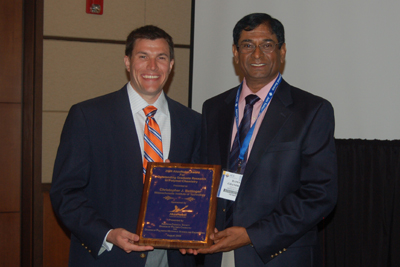
(l) Dr. Nicolay Tsarevsky
2008 National Starch & Chemical Award
The recipient of the 2008 National Starch and Chemical Award for Outstanding Graduate Research in Polymer Chemistry is Dr. Nicolay (Nick) Tsarevsky who received his doctorate in 2005 from Carnegie Mellon University under the direction of Professor Krzysztof (Kris) Matyjaszewski.
Tsarevsky studied the synthesis of functional polymers by atom transfer radical polymerization (ATRP). Various synthetic approaches were used to prepare polymers with polar functional groups, including post-polymerization modification of the repeating units or the end groups. Efficient chemical transformations employed included the nitrile-azide and alkyne-azide cycloaddition (click chemistry) and the reversible redox coupling of thiol to disulfide groups.
Tsarevsky also studied mechanistic aspects of ATRP, emphasizing the development of rules for rational catalyst selection for "challenging" reaction media, including water-borne systems.
He established that several side reactions of the copper-based ATRP catalyst with protic/aqueous solvents led to poor polymerization control, namely loss of halide ligand from the higher oxidation state radical deactivator or disproportionation of the lower oxidation state activator. The ideal catalyst mediating well-controlled ATRP in protic media is characterized by i) a high ratio bII/ bI of the stability constants of the Cu(II) and Cu(I) states of the catalyst to guarantee high catalytic activity; ii) high halidophilicity of the Cu(II) complex, which is related to the degree of control; and iii) a low ratio bII/ bI)2 to avoid disproportionation. His mechanistic studies led to the development of two new initiation techniques, ICAR and ARGET ATRP, that allow the process to be carried out with very low amounts of catalyst. The scope of ATRP has now expanded significantly, particularly with regard to aqueous solvents and coordinating monomers. Importantly, ATRP has become a truly "green" method with markedly increased utilization in industry.
The award was presented at a symposium honoring Nick Tsarevsky in the PMSE Division of ACS during the American Chemical Society National Meeting in Philadelphia, August 17-21, 2008.
2007 National Starch & Chemical Award
The recipient of the 2007 National Starch & Chemical Award for Outstanding Graduate Research in Polymer Chemistry is Dr. Jason Rolland, who received his doctorate in 2005 from the University of North Carolina, Chapel Hill, under the direction of Professor Joseph M. DeSimone. Dr. Rolland's Ph.D. dissertation research focused on novel applications for perfluoropolyethers (PFPEs), primarily in the field of nanotechnology.
A versatile technique, Particle Replication in Non-wetting Templates, or "PRINT(TM)" was developed that uses low surface energy PFPEs, cast onto nano-featured master templates and cured to form transparent fluoroelastomers. These become molds containing billions of nano-scale cavities that can be filled with liquid precursors that are solidified and harvested to yield highly monodisperse populations of shape-specific, engineered nano-scale particles. PRINT(TM) has tremendous promise in several applications including delivery of therapeutics such as siRNA and drugs for cancer treatment.
In addition to the PRINT process, PFPE elastomers can be patterned with micron and nanometer sized features and used as molds for imprint lithography. In collaboration with IBM researchers, Dr. Rolland showed that features as small as 70 nm can be replicated in organic resins with 1 nm precision using PFPE molds. The PFPE molds are superior in terms of resolution, release, and compatibility when compared to either poly(dimethyl siloxane) (PDMS) or rigid materials.
Multifunctional PFPE formulations were also synthesized and used to fabricate transparent, elastomeric, microfluidic devices compatible with organic solvents and chemical reagents. These replace PDMS, which swells in most organic solvents and is not compatible with microchemistry platforms. Multilayer, complex microfluidic chips containing pneumatic valves were fabricated from PFPE materials. Due to their compatibility with chemistry platforms, PFPE-based microfluidic chips have recently been used in the synthesis of radiolabelled biomarkers, such as [F-18] 2-Fluoro-2-deoxy-D-glucose for PET imaging.
The award was be presented at a symposium in Dr. Rolland's honor in the Division of Polymer Chemistry at the American Chemical Society National Meeting in Boston August 19-23, 2007.
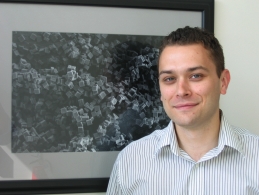
Dr. Jason Rolland
_______________________________
2006 National Starch & Chemical Award
The recipient of the 2006 National Starch & Chemical Award for Outstanding Graduate Research is Dr. Jiaxing Huang, who received his doctorate in 2004 from the University of California, Los Angeles, under the direction of Professor Richard B. Kaner. Dr. Huang's Ph.D. dissertation research led him to discoveries on the synthesis of high-quality polyaniline nanofibers with major impact in the fields of conducting polymers and nanoscience. These have led to advances in conducting polymer sensors, molecular memory devices and flash welding. He applied interfacial polymerization to produce uniform nanofibers without the need for difficult-to-remove templates, and demonstrated that these nanofibers could be used as sensors to detect parts-per-million or less of many acids and bases.
Following his elucidation of the fiber formation mechanism, he developed a method to create a stable colloidal dispersion of the nanofibers, suitable for processing to films or other forms, resolving a major roadblock to the widespread use of these materials. He discovered that the nanofibers could undergo wavelength and intensity dependent crosslink photo-thermal chemistry to form nanofiber connections, asymmetric films, photopatterns and polymer composites, and demonstrated that polyaniline nanofibers decorated with gold particles can serve as the active component in a device with a three order of magnitude change in conductivity between on and off states, and read, write, erase cycles at low voltages.
The Award, which will be presented at the San Francisco meeting of the American Chemical Society (Sept. 10-14), consists of a $2,000 prize, a plaque and travel expenses. This award, administered by the Polymer Education Committee of the Polymer Chemistry and Polymeric Materials Science and Engineering Divisions, was established in 1991 to recognize and encourage outstanding graduate research in polymer science and engineering. It is sponsored by National Starch & Chemical Co., a global manufacturer of adhesives, specialty polymers, electronic materials and specialty starches.
_______________________
Note: From 1991-2003 this award was sponsored by the Unilever Co.
Warren Ford reports that the recipient of the 2003 Unilever Award for Outstanding Graduate Research is Dr. Christopher W. Bielawski, who received his doctorate in October 2002 from the California Institute of Technology, Pasadena, CA under the direction of Professor Robert H. Grubbs. Dr. Bielawski's research efforts were directed toward establishing new concepts and strategies in macromolecular synthesis through the development of designer Ru catalysts. For example, the efficient synthesis of copolymers with segments that require two or more different polymeriza-tion techniques remains challenging as multiple steps are usually necessary. To circumvent this drawback, Bielawski developed a series of catalysts that are capable of simultaneously mediating two mechanistically distinct polymerizations (i.e., ring-opening metathesis polymerization and atom-transfer radical polymerization). This has enabled the preparation of a variety of complex block copolymers in a single pot.
A second aspect of Bielawski's research was focused on the synthesis of cyclic polymers. Traditionally, such polymers are made through the intramolecular coupling of linear precursors. However, such cyclizations are rarely quantitative and extremely dilute conditions are required which places limits on the ability to prepare substantial amounts of pure cyclic polymer. By adding monomer to a "cyclic" catalyst, Bielawski demonstrated that both ends of the growing polymer chain remain attached to the catalyst so the topology of polymer remains cyclic throughout the entire reaction.
____________________
2002 Unilever Award
The recipient of the 2002 Unilever Award for Outstanding Graduate Research is Dr. Kristi L. Kiick, who received her doctorate in May 2001 from the University of Massachusetts, Amherst, under the tutelage of Professor David A. Tirrell, now of the California Institute of Technology, Chemistry and Chemical Engineering. Kiick directed her research to the preparation of proteins using non- natural amino acids, with functional groups different from those of the natural amino acids. She manipulated the activity of a single enzyme in the bacterial host to prepare engineered proteins with novel chemical and physical properties.
Her investigations focused on replacing the amino acid methionine with methionine analogues that carry chemical groups that are unusual in biology, such as alkenes, alkynes, and azides. Engineering E. coli to produce extra copies of methionyl-tRNA synthetase ? the enzyme that controls the fidelity of methionine incorporation into proteins ? allowed methionine to be replaced by six different methionine analogues normally rejected by the bacterial host. This simple modification to the bacterial host also increased the yields of protein obtained during protein expression. These investigations confirm the critical role of MetRS in controlling analogue incorporation and suggest new strategies for incorporating non-natural amino acids into proteins to create novel classes of protein-based materials.
The Unilever Award, which will be presented at the Boston, MA, meeting of the American Chemical Society (Aug. 18-22) consists of a $2,000 prize, a plaque and travel expenses. This award, administered by the Polymer Education Committee of the Polymer Chemistry and Polymeric Materials Science and Engineering Divisions, was established in 1991 and is sponsored by Unilever, a global manufacturer of consumer products, foods and specialty chemicals. The award recognizes and encourages outstanding graduate research in the design, synthesis and physical chemistry of polymers. The award symposium and presentation will take place at the ACS National Meeting in Boston August 18-22 2002.
_________________________
The recipient of the 2001 Unilever Award for Outstanding Graduate Research is Dr. Shu Yang, Ph.D. Advisor:, , who received her doctorate in August 1999 under the tutelage of Professor Christopher K. Ober of Cornell University, Materials Science & Engineering Department. Her research lead to the creation of "reworkable" thermosets that contain specially designed weak links that decompose at low temperatures to permit network breakdown. These thermosets, now licensed, are proving to be of great interest to the microelectronics industry where adhesives that are robust under normal use, but can be removed under specific conditions, are highly desirable.
In her thesis research, she also designed new photoresists with fluorine and silicon-containing units for use in next generation lithographies. Her superb synthetic skills enabled her to prepare these photoresists for development with supercritical CO2. This solvent, along with its environmental friendliness, offers many intriguing properties for photolithography and includes low viscosity and no surface tension - important properties for developing the smallest features in a patterned image. Dr. Yang, working with another student, was able to invent new fluoropolymers that could be patterned with a resolution of ~0.2 µm, in the size range of the best experimental resists yet produced.
The Unilever Award, which will be presented at the Chicago, IL, meeting of the American Chemical Society (Aug. 26-30) consists of a $2,000 prize, a plaque and travel expenses. This award, administered by the Polymer Education Committee of the Polymer Chemistry and Polymeric Materials Science and Engineering Divisions, was established in 1991 and is sponsored by Unilever, a global manufacturer of consumer products, foods and specialty chemicals. The award recognizes and encourages outstanding graduate research in the design, synthesis and physical chemistry of polymers.
____________________________
The Unilever Award for Outstanding Graduate Research in Polymer Science and Engineering in 2000 was given to Linda Chen for research on rod-coil block copolymers that phase separate at unusual length scales. She earned the Ph.D. at the University of Rochester with Prof. Samson Jenekhe. The award symposium at the Washington ACS National Meeting in the Division of Polymeric Materials: Science and Engineering drew a large and lively audience.
____________________________
The recipient of the 1999 Unilever Award for Outstanding Graduate Research is Scott G. Gaynor, who received his doctorate under the tutelage of Professor Krzysztof Matyjaszewski at Carnegie Mellon University in Pittsburgh, PA. His doctoral dissertation focused on the preparation of polymeric materials with novel architectures (branched, hyperbranched, graft) using the controlled/"living" radical polymerization technique, atom transfer radical polymerization (ATRP). He demonstrated that highly functionalized, highly branched, but uncrosslinked, polymers could be readily obtained by radical polymerization. His graduate research also involved the development of new ATRP catalyst systems and ATRP techniques which can readily prepare a wide range of materials, including telechelic polymers, amphiphilic copolymers, wholly acrylic thermoplastic elastomers, block copolymers of condensation and vinyl polymers. These new materials synthesized by ATRP are expected to find uses in numerous applications where well-defined composition, architecture and/or functionality is desired.
The Unilever Award, which will be presented at the New Orleans meeting of the American Chemical Society (Aug. 22-26) consists of a $2,000 prize, a plaque and travel expenses. This award, administered by the Polymer Education Committee of the Polymer Chemistry and Polymeric Materials Science and Engineering Divisions, was established in 1991 and is sponsored by Unilever, a global manufacturer of consumer products, foods and specialty chemicals. The award recognizes and encourages outstanding graduate research in the design, synthesis and physical chemistry of polymers.
_______________________
The recipient of the 1998 Unilever Award for Outstanding Graduate Research is James J. Watkins, who received his doctorate under the guidance of Professor Thomas J. McCarthy at the University of Massachusetts, Amherst.
His doctoral dissertation involved high pressure chemical synthesis, materials characterization, and chemical engineering polymer processing aspects of a new approach to make advanced polymer materials. The approach takes advantage of the observation that virtually all polymers are swollen to some extent in supercritical CO2, in order to use this medium for reactions to modify the swollen polymer. For example, a polymer composite may be formed by in situ polymerization of monomers dissolved in the swollen polymer, providing the possibility for the synthesis of a wide range of multicomponent compositions.
Control of the morphology of the composite is provided through reaction temperatures, times, concentrations, etc. The Unilever Award, which will be presented at the Boston meeting of the American Chemical Society (Aug. 22-26, 1998), consists of a $2,000 prize, a plaque and travel expenses. This award, administered by the Polymer Education Committee of the Polymer Chemistry and Polymeric Materials Science and Engineering Divisions, was established in 1991 and is sponsored by Unilever, a global manufacturer of consumer products, foods and specialty chemicals. The award recognizes and encourages outstanding graduate research in the design, synthesis and physical chemistry of polymers.
____________________
The recipient of the 1997 Unilever Award for Outstanding Graduate Research is Dong-Yu Kim, who received his doctorate under the guidance of Professor Sukant Tripathy at the University of Massachusetts Lowell. His doctoral dissertation involved photoinduced dynamics in polymers below the glass transition temperature in the formation of surface relief gratings induced in polymers containing azobenzene side groups. These gratings have potential use in information storage by holography, and the studies have resulted in number of publications and a patent application. He was awarded B.S. and M.S. degrees from Seoul University, and worked for three years as a Research Scientist at the Korea Institute of Science and Technology (KAIST) in Seoul before joining Professor Tripathy's research group.
His work at KAIST resulted in a patent on the use of liquid crystalline polymers in storage medial. The Unilever Award, was presented at the Las Vegas meeting of the American Chemical Society (Sep. 7-11) consisted of a $2,000 prize, a plaque and travel expenses. This award, administered by the Polymer Education Committee of the Polymer Chemistry and Polymeric Materials Science and Engineering Divisions, was established in 1991 and is sponsored by Unilever, a global manufacturer of consumer products, foods and specialty chemicals. The award recognizes and encourages outstanding graduate research in the design, synthesis and physical chemistry of polymers.
__________________________
1996 Unilever Award
The recipient of the 1996 Unilever Award for Outstanding Graduate Research is Kristi S. Anseth. Dr. Anseth, now a Research Fellow at Massachusetts Institute of Technology, received her doctorate under the guidance of Professor Christopher N. Bowman at the University of Colorado at Boulder, working on reaction mechanisms and polymer structure evolution in the photo-polymerizations of multifunctional monomers. Her doctoral dissertation, which involved experimental and theoretical investigations of crosslinking reactions and the polymer structure formed, has already resulted in a number of publications. She was awarded a B. S. (Chem. Eng.) with Highest Distinction by Purdue University in 1992.
Dr. Anseth has received a number of awards and honors during her academic career, including a National Science Foundation Fellowship and an NIH National Research Service Award Individual Postdoctoral Fellowship. The Unilever Award, which will be presented at the Orlando meeting of the American Chemical Society (Aug. 25-29), consists of a $2,000 prize, a plaque and travel expenses. This award, administered by the Polymer Education Committee of the Polymer Chemistry and Polymeric Materials Science and Engineering Divisions, was established in 1991 and is sponsored by Unilever, a global manufacturer of consumer products, foods and specialty chemicals. The award recognizes and encourages outstanding graduate research in the design, synthesis and physical chemistry of polymers.
____________________________
1995 Unilever Award
The recipient of the 1995 Unilever Award for Outstanding Graduate Research is Rangaramanujan M. Kannan. Dr. Kannan, currently a postdoctoral fellow at the University of Minnesota-Minneapolis. Dr. Kannan obtained his doctorate under the guidance of Prof. Julia A Kornfield at the California Institute of Technology, Pasadena where he worked on the development of rheo-optical methods to study dynamics in complex polymer melts. Dr. Kannan did his undergraduate work at the Birla Institute of Technology and Science, Pilani, India where he was a National Merit Scholar. He holds Master's degrees from Pennsylvania State University and California Institute of Technology.
While at the California Institute of Technology, he was DuPont Graduate Fellow and a Charles Lee Powell Foundation Graduate Fellow. The award, which was presented at the Chicago meeting of the American Chemical Society (Aug. 1995) consists of a $2,000 prize, a plaque and travel expenses. This award, administered by the Polymer Education Committee of the Polymer Chemistry and Polymeric Materials Science and Engineering Divisions, was established in 1991 and is sponsored by Unilever, a global manufacturer of consumer products, foods and specialty chemicals. The award recognizes and encourages outstanding graduate research in the design, synthesis and physical chemistry of polymers.
________________________
The recipient of the 1994 Unilever Award for Outstanding Graduate Research is Timothy J. Deming, currently a National Institutes of Health Postdoctoral Fellow at the University of Massachusetts, Amherst. Dr. Deming obtained his doctorate under the guidance of Prof. Bruce M. Novak at the University of California, Berkeley where he worked on the development of well-defined transition metal complexes for the living polymerization of isocyanides, butadiene and other unsaturated monomers.
Dr. Deming did his undergraduate work at the University of California, Irvine, where he received the Donald L. Bunker Memorial Award, was a University of California President's Undergraduate Fellow and graduated magna cum laude. He was also elected to Phi Beta Kappa and Phi Lambda Upsilon. The award, which will be presented at the Wahington meeting of the American Chemical Society (Aug. 21-26) consists of a $2,000 prize, a plaque and travel expenses. This award, administered POLYED, was established in 1991 and is sponsored by Unilever, a global manufacturer of consumer products, foods and specialty chemicals. The award recognizes and encourages outstanding graduate research in the design, synthesis and physical chemistry of polymers.
_______________________
The recipient of the 1993 Unilever Award for Outstanding Graduate Research is Christopher N. Bowman.
________________________
________________________
The recipient of the 1993 Unilever Award for Outstanding Graduate Research is Richard A. Register.
_______________________
The recipient of the 1993 Unilever Award for Outstanding Graduate Research is Christopher B. Gorman.
